Service area · Tennessee
Tree care in Mascot
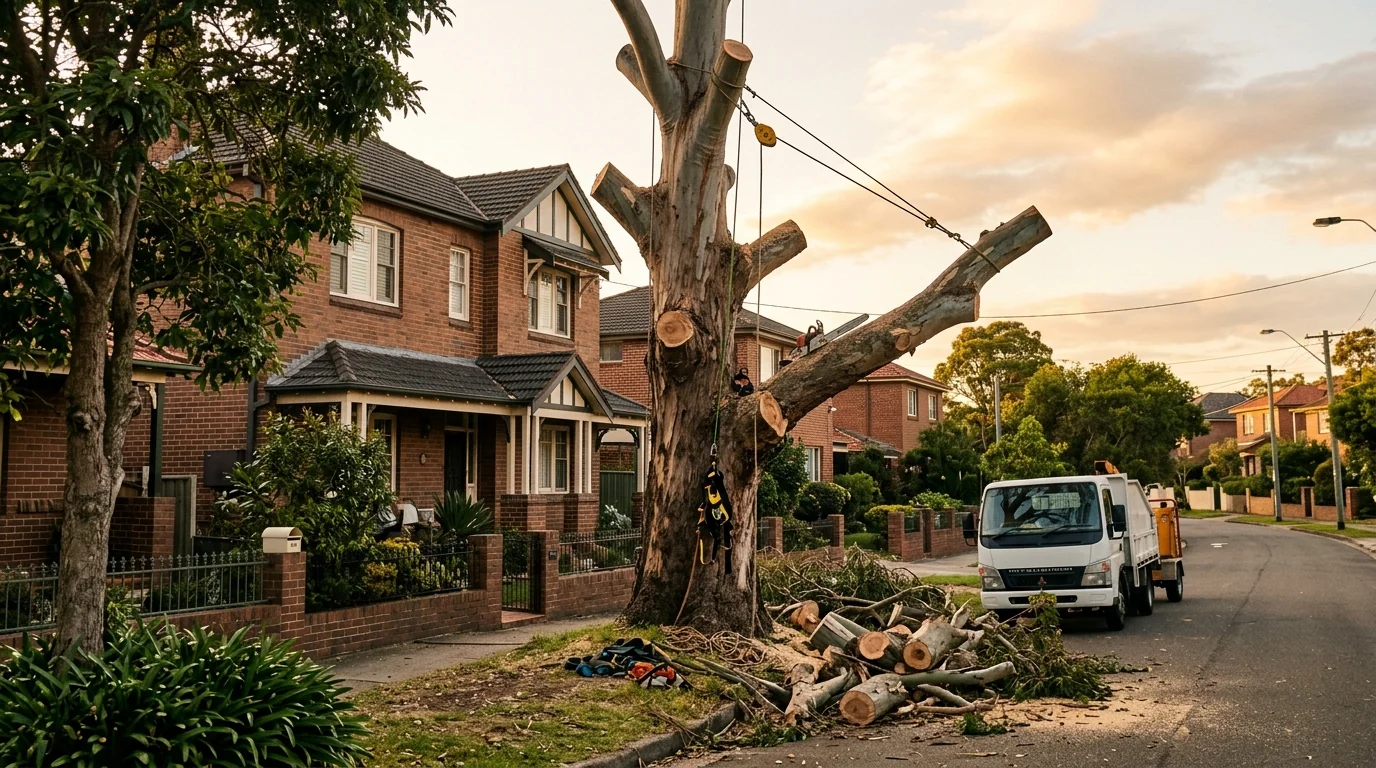
Mascot is a census-designated place in Knox County, Tennessee, with a population of around 2,760. The area sits east of Knoxville along the Holston River corridor, where seasonal storms, dense tree canopy, and older residential lots create steady demand for professional tree removal. Knox County crews serve this community year-round for hazard removals, storm cleanup, and routine canopy management.
Why Mascot Tree Removal Is Different
Mascot sits in the eastern section of Knox County along the Holston River corridor, about twelve miles from downtown Knoxville. As a census-designated place rather than an incorporated city, it developed without a centralized municipal tree code or a city arborist program. That means homeowners here carry more individual responsibility for identifying and addressing hazardous trees before they become emergencies. The lot patterns, tree species, storm exposure, and the absence of city-level oversight together make tree removal in Mascot a different task than in more urbanized parts of Knox County.
Soil and Geology in the Holston River Corridor
The Holston River bottomlands that border the eastern edge of Mascot create soil conditions that affect how trees root and how stable those roots remain during wet seasons. Bottomland soils tend to hold more moisture, which encourages fast early growth in hardwood species but also produces shallower root systems than the same tree would develop on higher, drier ground. A large oak or maple that looks healthy from the street may have roots that grip saturated soil poorly during a prolonged rain event or a frost-thaw cycle in late winter.
Away from the river, Knox County terrain transitions to the clay-heavy soils typical of East Tennessee’s Ridge and Valley physiographic province. Clay soils shrink and swell with moisture changes, which affects both tree root stability and the foundations of nearby structures. Homeowners with trees within fifteen to twenty feet of a crawl space or older foundation wall should have those trees evaluated periodically. Detailed Knox County soil mapping is maintained by the USDA, which tracks how soil series shift across the county’s varied terrain.
Climate and Storm Exposure
The Knoxville metro area sits in a climate zone where spring thunderstorm systems push through repeatedly from March through May, summer convective storms deliver intense short-duration wind shear in June through August, and winter ice events periodically load canopy branches past their breaking point. The NOAA Storm Events Database documents the frequency of high-wind events across Knox County, and the record shows that straight-line wind damage is a consistent annual hazard in this part of Tennessee.
Mascot’s position east of Knoxville, without the topographic buffering that some ridge-sheltered communities enjoy, leaves it exposed to storm tracks that follow the Holston River valley. Mature pines are particularly vulnerable to ice loading and lightning strikes. Bradford pears, common in subdivisions built from the 1980s onward, have structurally weak branch unions that split predictably under wind stress. If you’ve had a storm event recently, reviewing your canopy before the next weather system arrives is worth the time it takes.
Housing Era and Lot Characteristics
Mascot grew up largely as an unincorporated residential community serving workers in the broader Knox County economy. The housing stock reflects multiple eras, from mid-century homes on larger lots with decades of tree growth to more recent infill construction where new structures sit close to established trees planted by previous owners. Older lots along Rutledge Pike and the Holston River area often feature mature canopy trees that were small and manageable when the houses were built but now tower well above rooflines.
That growth mismatch is one of the core reasons tree removal demand stays consistent in Mascot. A tree planted thirty years ago as a sapling may now drop limbs onto a roof during every significant storm. The USDA Forest Service’s Urban and Community Forestry program notes that urban and suburban tree canopy delivers real property value, but only when trees are properly managed. Deferred maintenance on large, aging trees converts a landscape asset into a liability.
Mascot Neighborhoods and Patterns
- Rutledge Pike Corridor. The main commercial and residential spine of the Mascot community, with a mix of older ranch-style homes and newer construction. Mature trees frequently overhang structures and driveways.
- Holston River Bottomlands. Lower-elevation lots with moisture-retentive soils, shallow-rooted hardwoods, and a higher incidence of storm-toppled trees after significant rain events.
- Mascot Road Area. A predominantly residential zone with mid-century housing stock and established oak and maple canopy that requires regular assessment.
- Old Richland Creek Vicinity. Drainage-influenced terrain where soil saturation affects root stability and where creek-edge trees are most likely to lean or uproot.
- Kodak Road Edges. Transition zone toward the Kodak CDP, with a mix of lot sizes and tree types including pine stands that carry lightning and ice-load risk.
- Idumea Road Area. Rural-residential feel with larger lots, older trees, and less frequent maintenance history. Large removal jobs are common here.
- Strawberry Plains Pike Border. Higher-traffic corridor where trees near the road right-of-way may fall under Knox County or TDOT oversight for removal permits.
- Pleasants Road District. Quieter residential streets with mixed-era construction and canopy trees that often predate the current homes.
How to Find a Mascot Tree Removal Contractor
Choosing the right contractor in an unincorporated community like Mascot matters more than in areas with strong municipal oversight, because there’s no city inspection system to catch shortcuts. The Tree Care Industry Association outlines what accreditation means and what to look for when evaluating companies. Here are four criteria worth applying to any contractor you consider for work on your property.
ISA credential verification. An ISA Certified Arborist has passed a comprehensive exam covering tree biology, diagnosis, pruning standards, and risk assessment. The International Society of Arboriculture maintains a public find-an-arborist directory where you can confirm that any credential a contractor claims is currently active. In a community without a municipal arborist program, this credential is your primary quality signal.
Local Knox County experience. Ask specifically whether the contractor has worked in Mascot or nearby unincorporated areas of Knox County. Experience matters because contractors who know Rutledge Pike lots understand access constraints, overhead utility clearances common in older residential areas, and the soil conditions near the Holston River that affect how large trees fall. A company that primarily operates in urban Knoxville may underestimate what a bottomland removal requires.
Insurance documentation. Request certificates of liability insurance and workers’ compensation before any crew sets foot on your property. Tree removal is classified as a high-hazard occupation under OSHA standards, and an uninsured crew working on your property creates direct financial exposure for you if a worker is injured or a falling limb damages a neighboring structure.
Diagnostic discipline before quoting. A qualified contractor will walk the site, assess the tree’s root zone and crown structure, and ask about your goals before naming a price. If a contractor quotes removal over the phone without an inspection, that’s a red flag. The International Society of Arboriculture’s homeowner resources explain how proper tree health assessment works and what a professional evaluation should include.
What to Expect from a Mascot Inspection
Scheduling a free tree removal inspection before storm season is the single most effective step Mascot homeowners can take to avoid emergency situations. A thorough site visit covers four areas.
Exterior walk-around. The arborist circles the entire tree, looking at trunk lean, bark condition, visible cavity or decay, fungal growth at the base, and crown density. Asymmetric canopy or dead wood in the upper crown often signals structural problems not visible from ground level. In Mascot, overhead utility lines are a consistent complicating factor that affects the removal approach.
Interior and crown inspection. Using binoculars or a climbing assessment when warranted, the arborist evaluates co-dominant stems, included bark in major branch unions (a common failure point in mature oaks and maples), and signs of disease or insect activity. Bradford pears and silver maples, both common in Knox County subdivisions, are flagged frequently for structural weakness during this phase.
Root zone and soil assessment. Near the Holston River bottomlands, soil saturation and erosion patterns around the base of a tree are meaningful data points. The arborist checks for root plate movement, soil heaving, or exposed roots that indicate the tree is shifting. On clay-heavy Knox County soils, root zone conditions after a wet season can change dramatically in a short period.
Slope and drainage review. Mascot terrain varies from flat bottomland to gently rolling residential streets. Trees on slopes direct failure toward downhill structures, and the arborist will note any drainage patterns that affect the removal plan or debris management. If the site has proximity to a creek or floodplain, that context shapes both the removal method and any applicable county oversight.
Repair Methods Used Most Often in Mascot
For a full breakdown of what each service costs, visit the tree removal cost guide and the tree services overview. Below are the methods most commonly applied to Knox County residential properties, in order of frequency.
-
Standard tree removal. The baseline service for dead, dying, or hazardous trees with reasonable ground access. According to Bob Vila, most residential removals run between $385 and $1,070 depending on tree size and site conditions. This covers felling, limbing, and chipping on-site.
-
Stump grinding. Usually quoted as a separate line item after removal. Bob Vila cites stump grinding costs generally in the range of $100 to $400 per stump. Leaving stumps in place invites fungal disease and creates a tripping hazard on residential lots. See stump grinding details for more.
-
Emergency hazard removal. Storm-damaged or actively leaning trees require immediate response. Bob Vila notes that emergency tree removal commands a significant premium, with hazard jobs often reaching $2,500 to $5,000 or higher. After any major Knox County storm event, scheduling quickly matters because crews book fast. Review emergency tree removal information for what to expect.
-
Crane-assisted removal. Required when a tree is too close to a structure for conventional felling. Crane work is the most expensive approach, with costs at the higher end of the emergency range cited by Bob Vila. Mascot lots near the river bottomlands or along older Rutledge Pike streets sometimes require this method when trees overhang rooflines or carports. See crane tree removal details.
-
Crown pruning and canopy thinning. Not every situation calls for full removal. Where a tree is structurally sound but overgrown, selective pruning reduces wind load and removes hazardous dead wood while keeping the tree. This is consistent with ANSI A300 pruning standards maintained by TCIA.
-
Tree health assessment and treatment. For trees showing early signs of disease or pest activity, a certified arborist may recommend treatment rather than removal. The ISA’s Trees Are Good homeowner resources outline the save-versus-remove decision framework that qualified arborists apply.
If you’re unsure which service applies to your situation, the tree problems guide walks through common signs of decline and what they typically indicate.
Mascot Building Permits
Mascot is an unincorporated census-designated place, which means it has no incorporated municipal government and no city-level building or tree permit department. Knox County handles land-use and construction oversight for unincorporated areas, and Knox County Code Enforcement is the correct agency to contact before beginning any significant tree work that involves structures, grading, or public right-of-way impacts.
For standard private-property tree removal on residential lots, Knox County does not universally require a permit for every tree. However, trees within a certain distance of utility easements, drainage ways, or public roads may fall under specific Knox County or Tennessee Department of Transportation regulations. When in doubt, a quick call to Knox County Code Enforcement before work begins is faster and cheaper than resolving a stop-work order after the crew arrives.
If a tree on your property is near a shared boundary with a neighbor, Tennessee property law and your homeowner’s insurance policy both become relevant. The Insurance Information Institute provides a clear breakdown of when homeowners insurance covers fallen tree damage and when it does not, including situations where a neighbor’s tree causes damage to your property. Reading that guidance before a storm season is a practical step for any Knox County homeowner with large trees near property lines.
Other Knox County and East Tennessee Areas We Serve
Mascot sits within a broader service area covering unincorporated Knox County and adjacent communities. If you have a property elsewhere in the region, the same certified crews cover these markets.
- Tree removal services in Knoxville covers the urban core and all incorporated city neighborhoods.
- John Sevier area tree removal serves the southeast Knox County community along the Holston River.
- Powell tree removal services covers the north Knox County corridor along U.S. 25W.
Neighborhoods served
Mascot neighborhoods
- Rutledge Pike Corridor
- Holston River Bottomlands
- Mascot Road Area
- Old Richland Creek Vicinity
- Kodak Road Edges
- Idumea Road Area
- Strawberry Plains Pike Border
- Pleasants Road District
Questions
Mascot tree care FAQs
Why are tree hazards so common in Mascot?
How much does tree removal cost in Mascot?
Does Mascot require a permit for tree removal?
How do I check a tree contractor's history before hiring?
Which Mascot neighborhoods have the most tree removal activity?
Are free inspections available for Mascot homeowners?
Free estimate
Free Mascot tree estimate
On-site assessment, written quote within 24 hours, no obligation.